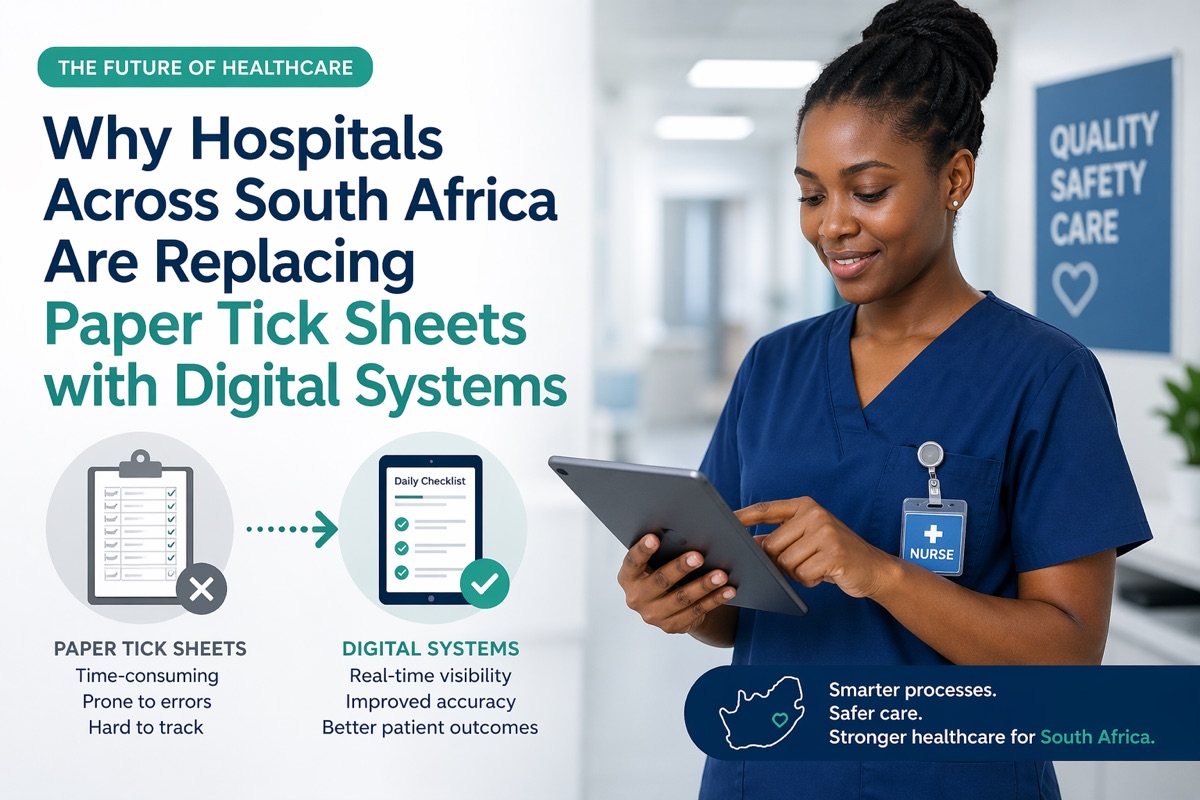
For decades, hospital meal ordering has relied on printed menus, handwritten notes, and tick sheets carried from ward to ward. While familiar, this approach is increasingly out of step with the demands of modern healthcare.
Private hospitals in South Africa are under growing pressure to deliver consistent, high-quality patient experiences while maintaining operational efficiency. With occupancy rates in many private facilities frequently exceeding 70–80%, even small inefficiencies in daily processes can have a significant impact at scale. From Johannesburg to Cape Town, Durban to Pretoria, private hospital groups across South Africa are recognising that paper-based catering processes are no longer sustainable at scale.
This is where healthcare food service software is changing the landscape. Hospitals are now moving to replace hospital tick sheets with digital systems, enabling faster, more accurate, and more accountable meal ordering processes.
The Problem with Paper-Based Meal Ordering
Paper tick sheets may seem simple, but they introduce multiple points of failure into a critical workflow.
Common challenges include:
- Illegible handwriting leading to incorrect meals
- Lost or misplaced sheets during ward rounds
- Delays between order collection and kitchen preparation
- Difficulty capturing last-minute patient changes
In isolation, these issues are manageable. In a high-volume hospital environment, they compound quickly.
The result:
- Incorrect meals delivered to patients
- Dietary requirements missed
- Increased pressure on nursing and catering teams
Why Manual Processes No Longer Work at Scale
Modern private hospitals operate in complex, fast-moving environments. They must manage:
- High patient turnover
- Detailed dietary requirements
- Tight service windows for meal delivery
Paper-based systems were never designed for this level of operational demand.
Without a structured hospital meal management system, coordination between wards, hostesses, and kitchens becomes fragmented. This leads to delays, duplication of effort, and a higher likelihood of error — particularly during peak service periods.
Paper vs Digital: A Practical Comparison
| Process Area | Paper Tick Sheets | Digital System |
|---|---|---|
| Order Accuracy | Prone to handwriting errors | Structured, accurate input |
| Speed of Communication | Delayed (manual handover) | Real-time updates |
| Visibility | Limited to physical sheets | Live view across teams |
| Audit & Compliance | Difficult to track | Full digital audit trail |
| Data & Reporting | None | Real-time insights |
| Staff Efficiency | High admin workload | Streamlined workflows |
This comparison highlights why hospitals are prioritising digital transformation in catering operations.
The Shift to Digital Meal Ordering
To address these challenges, hospitals are moving toward digital hospital catering systems that replace paper-based workflows entirely.
With platforms like MediCater:
- Meal requests are captured digitally at the source
- Orders are updated instantly as patient needs change
- Information flows directly to the kitchen in real time
This creates a connected system where every stakeholder — from patient to catering team — is working from the same, accurate information.
Real-Time Visibility for Hospital Staff
One of the most immediate benefits of a hospital hostess app is real-time visibility.
Instead of relying on paper records, staff can:
- View all patient meal requests instantly
- Track updates as they happen
- Prioritise tasks based on real-time demand
This improves coordination across wards and reduces reliance on memory or manual tracking.
For catering teams, it means better preparation. For ward staff, it means less back-and-forth. For patients, it means a more reliable service.
Real-World Scenario: From Paper to Digital
Consider a private hospital serving approximately 300 patients daily.
Under a paper-based system:
- Orders are collected manually across multiple wards
- Sheets are returned to the kitchen in batches
- Last-minute changes are often missed
This results in:
- Meal discrepancies
- Delays in service
- Food waste from incorrect preparation
After implementing a healthcare food service software solution like MediCater:
- Orders are captured instantly at the bedside
- Changes are updated in real time
- Kitchen teams receive accurate, structured data
The outcome:
- Fewer errors
- Faster service
- Reduced food waste
- Improved patient satisfaction
Improving Accuracy and Patient Care
Accuracy in hospital meal delivery is not just an operational concern — it directly affects patient well-being.
A hospital meal ordering system in South Africa ensures that:
- Dietary requirements are captured correctly
- Orders are clearly recorded and communicated
- Patients receive the correct meals at the right time
This not only improves operational efficiency but also supports better patient outcomes — particularly where nutrition plays a role in recovery.
Reducing Administrative Burden
Paper-based systems create significant hidden administrative work. Staff often need to:
- Transcribe handwritten notes into kitchen instructions
- Cross-check orders for accuracy
- Resolve discrepancies between what was ordered and what was prepared
A digital hospital catering system eliminates these inefficiencies by capturing information once and making it available across the entire workflow. This reduces duplication, improves clarity, and allows staff to spend more time on patient care rather than paperwork.
Better Data, Better Decisions
One of the biggest advantages of healthcare food service software is access to actionable data. Hospitals can track:
- Meal demand trends
- Menu performance
- Service efficiency
In South African private hospitals, food waste can account for a meaningful portion of operational costs. Even small improvements in forecasting and preparation can lead to significant savings over time. By leveraging a digital platform, hospitals can:
- Reduce overproduction
- Improve procurement accuracy
- Align supply with real demand
Supporting Compliance and Accountability
Hospitals operate in highly regulated environments where accountability is critical. Paper-based systems make it difficult to:
- Track who recorded an order
- Verify when changes were made
- Maintain accurate historical records
A digital system provides:
- Timestamped records of every action
- Clear audit trails
- Structured reporting
This makes it easier to meet compliance requirements and respond to internal or external audits with confidence.
A Natural Step Toward Digital Healthcare
The move away from paper is not limited to catering. Across healthcare, processes are being digitised — from patient records to clinical workflows. Replacing tick sheets with a digital meal ordering system is part of this broader transformation. It aligns hospital catering operations with modern standards and supports a more integrated approach to healthcare management.
A Smarter Way to Manage Hospital Catering
MediCater provides a hospital meal management system designed specifically for the realities of South African hospitals. By replacing manual processes with structured digital workflows, facilities can:
- Improve accuracy and consistency
- Reduce inefficiencies across departments
- Enhance the overall patient experience
The result is a system that is easier to manage, more reliable, and better suited to modern healthcare environments.
Frequently Asked Questions
What is a hospital hostess app?
How does a digital hospital meal ordering system work?
What are the compliance benefits of replacing paper tick sheets?
Is MediCater suitable for both public and private hospitals in South Africa?
How quickly can a hospital implement MediCater?
Ready to Move Beyond Paper?
If your hospital is still relying on paper tick sheets, now is the time to explore a more effective approach. Switching to a digital system allows hospitals to improve efficiency while delivering better outcomes for both patients and staff.